How 1st Call Roadside gains real-time visibility and faster response on the road
Introducing 1st Call Roadside
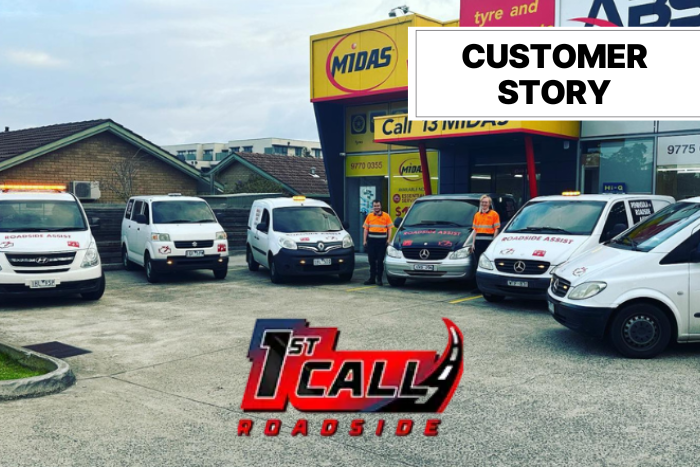
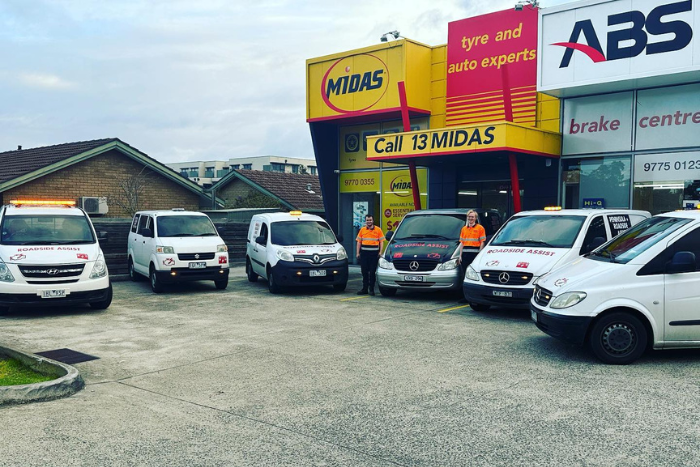
1st Call Roadside provides 24/7 emergency roadside assistance, towing, and mobile mechanical services across the Mornington Peninsula and the wider Melbourne metro area.
Their work is time-critical. Customers are often stranded, stressed, and expecting help to arrive quickly. With a fleet of around 20 service vehicles on the road at any time, their work depends on fast response, clear communication, and knowing exactly where each technician is when a call comes in.
Situation: What daily operations look like on the ground
A typical day involves multiple incoming requests, technicians moving between jobs, and dispatchers making rapid decisions about who should respond next.
The control team must be able to:
- Reach any field technician instantly
- See who is closest to the customer
- Redirect teams when priorities change
Challenge: Where the old setup slows down efficiency
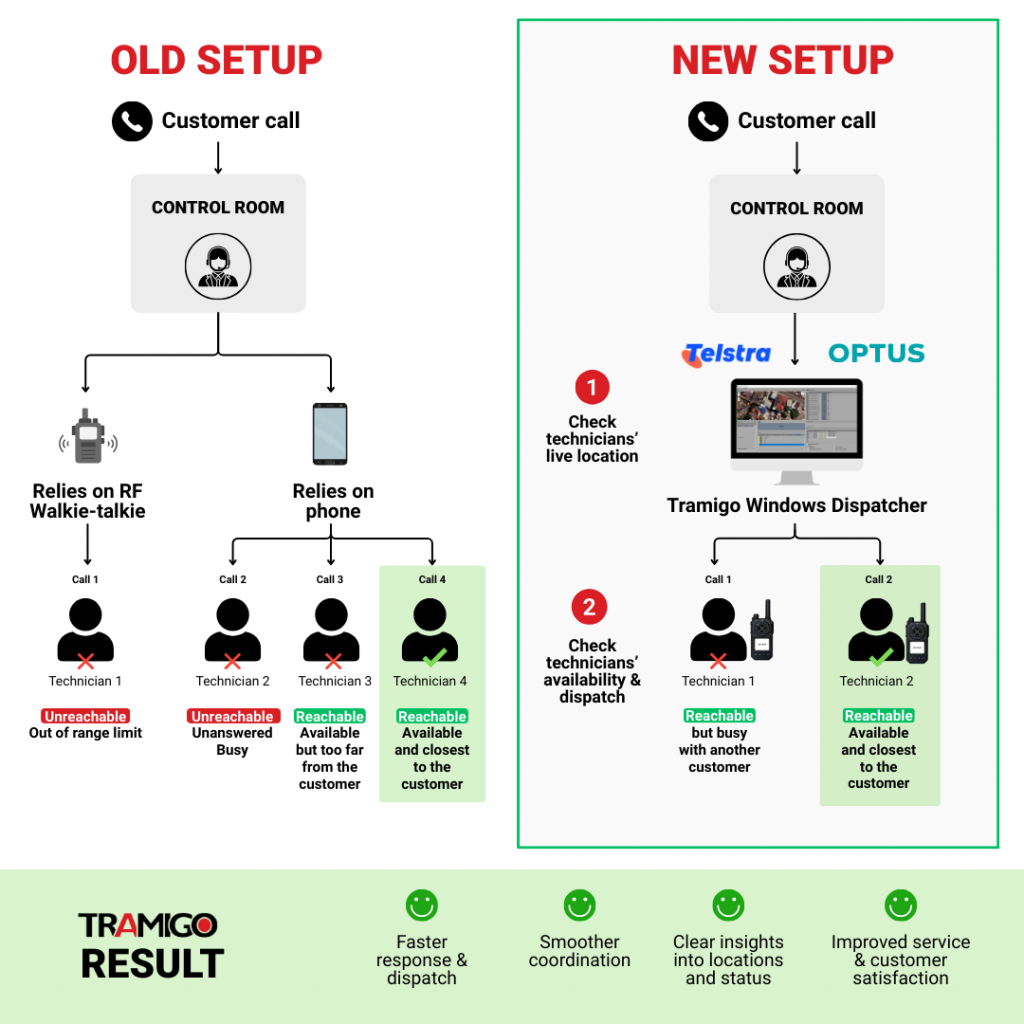
Before working with Tramigo, 1st Call Roadside relied on a mix of mobile phones and RF radios.
- RF radios struggled with range outside limited areas
- Phone calls were slow and unanswered when technicians were busy
- Dispatchers had no live view of service vehicle locations
Reaching the right person took longer than it should. Assigning the closest vehicle relied on repeated calls rather than clear, real-time information.
Solution: Tramigo Push-To-Talk over Cellular (PoC) communication
1st Call Roadside deployed 20 units of Tramigo MCPTT-1-XC devices together with the Windows Dispatcher.
The team chose Tramigo for four strategic reasons:
- Statewide push-to-talk communication over cellular networks
- Dual-network coverage using Optus and Telstra
- Integrated GPS location visible to dispatch in real time
- One supplier for hardware, software, and connectivity
The setup fit their operating reality without changing how teams work on the ground.
Impact: Optimized communication and coordination among field teams
Since rollout, the team reports faster dispatch to customers and smoother coordination during busy periods. Communication is more direct, technicians are easier to reach, and fewer calls are wasted chasing unavailable staff. Overall productivity increased because the team stays connected throughout each shift.
- Dispatch sees live locations of all vehicles and assigns the nearest technician immediately
- One-button push-to-talk replaces repeated phone calls and missed connections
- Group calls allow teams to coordinate towing, recovery, and on-site repairs without delay
- Communication remains consistent across metro and regional coverage areas
For roadside assistance teams covering large areas, reliable communication and live visibility make the difference between fast response and unnecessary delay.
Is your fleet facing similar coordination challenges? Tramigo offers free consultations with local specialists to review your current setup and discuss what would work best for your operation. Get in touch with us today.